
⏱ ~5 min reading
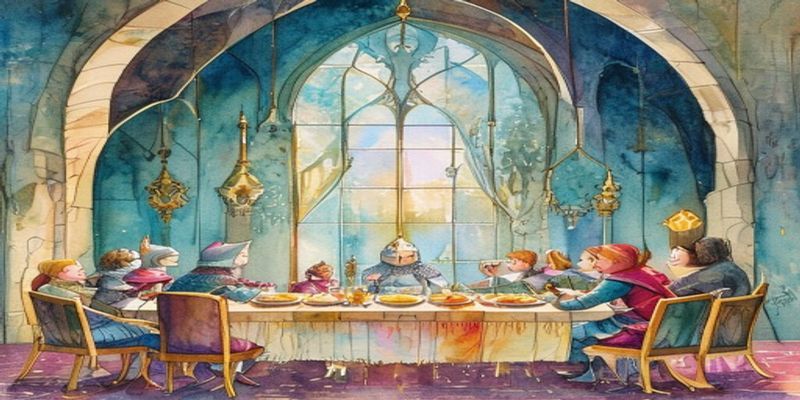
In the great castle, where the windows looked out onto a pine forest and the walls were made of warm yellow stone, something special happened every evening. When the first dawn broke over the forest and the bell in the tower rang seven times, the knights of the kingdom would gather in the great refectory. For a common dinner.
The dining room was long, long. In the middle was an oak table, so heavy that about six strong men could barely move it. On the table were jugs of milk, wooden bowls, warm rye bread that smelled of dill and caraway, honey in clay pots, hard yellow cheeses from small village cheese factories. Tall candles flickered in the corners of the room, and oak logs crackled softly in the fireplace. It smelled of resin, warm wax, and fresh bread.
The knights entered one after another. They took off their heavy cloaks, hung their swords on hooks by the wall, washed their hands in wooden bowls with fragrant water - they added a sprig of mint and a few petals of rose to the water. They sat down at the table - the older ones closer to the hearth, the younger ones on their side.
And then the fairy tales began.
Not about battles. Not about who defeated whom and whose sword was sharper. They didn't like that in the castle. They told other things - about wisdom, about apprenticeship, about friends, about how someone once managed to understand someone else. The older ones shared - the younger ones listened and asked questions.
That evening, the old knight Ivan was the first to speak. His beard was long, white as freshly fallen snow, and on his finger was a simple copper ring. Ivan broke off a slice of bread, slowly dipped it in honey, and began:
— Once, when I was still very young, I brought a wagonload of grain to the castle. And there were widows with their children standing at the gate. Hungry. I should have given the grain to the granary. But I thought about it and poured it into their sacks - a quarter each. The eldest said: "What are you talking about, Ivan, this isn't yours." And I replied: "It will only become mine if I share it.".
Young Ostap, who was sitting opposite and was still preparing to become a knight—he had just turned fifteen—rested his head on his hand and asked quietly:
"Weren't you punished, Ivan?"
"They punished me," the old man nodded. "The king ordered me to wash the stables for a week. But when I washed them, those widows would come and bring me warm pies. And I realized: I didn't lose, I gained.".
The knights at the table smiled. Some nodded, some stroked their beards. Ivan chewed his bread and asked:
— And you, Stepan, how did you calm that angry dog?
Stepan was younger than Ivan, about forty, with dark eyes and a very calm voice. He put down his mug of milk, wiped his mustache, and answered:
— And I didn’t do anything special, Ivan. I just sat on the ground near the gate. The dog growled like a black cloud, tearing at the chain. And I sat by myself. I breathed quietly. I didn’t look him in the eye. Because when you look him in the eye, he thinks you’re his enemy. And I was like a stone. Like an old log. An hour passed — the dog lay down. A second passed — he put his head on my boot. I gently stroked his ear. He’s never growled at me since. Do you know how I understood then? Sometimes the greatest strength is not to fight. But to just sit next to him and wait.
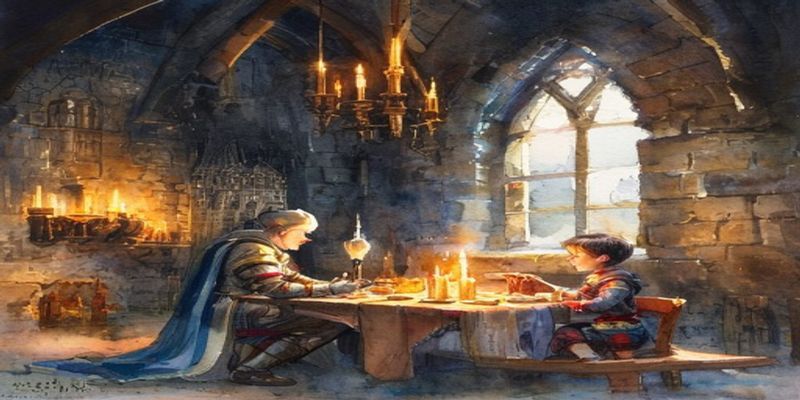
Ostap listened, his eyes shining with attention. He chewed the bread mechanically, forgot about the honey, forgot about the cheese. He absorbed everything.
"And you, little one," Ivan turned to him, "did you have something today too? Maybe little one. Anyway, tell me.".
Ostap blushed. He lowered his eyes.
— Yes… nothing big, Mr. Ivan. Today I… helped carry firewood in the kitchen. The cook Martusya is old, it’s hard for her. I carried it. And she gave me a pie. And she said: «You, son, have a good heart, hide it like a treasure.» That’s all.
The table became very quiet. Only the fire crackled.
Ivan nodded slowly and said:
"This is what chivalry is, Ostap. Not a sword. Not armor. But carrying firewood to your grandmother. Remember.".
So the evening passed. So the second passed. So the tenth, hundredth, thousandth passed. The knights told how someone reconciled two neighbors who had not spoken for years. How someone found a word for orphans. How someone was not afraid to tell the king the truth, even when it was inconvenient. How someone carried water to someone else's grandmother until she recovered.
The younger ones listened and memorized. They memorized the words, intonations, pauses. And these tales settled in them, like golden dust settles to the bottom of a quiet river. And when the younger ones grew up, they themselves sat closer to the hearth and began to tell their own stories.
Fifty years later, a quiet boy who had been listening at that table for a long time collected all these tales and wrote them down in a large book. Leather, with copper clasps. The book was read all over Europe. It was copied by monks in distant monasteries. Merchants carried it across the seas. Because wisdom is always needed.
And in the castle, by the way, nothing has changed. The seven strikes of the bell are the same. The smell of warm bread is the same. The tall candles are still burning. And at the long table, the elders share, and the younger ones listen.
You also have a family at the table. Maybe not a knightly one. Maybe a small one. Dad, mom, grandma, grandpa, brother, sister. Sit down one evening and ask them to tell you something. A little thing. How grandma once met grandpa. How mom fell off her bike as a child. How dad was afraid of the dark.
This is your legacy. Not yet written down. But the most precious.
✨ The most precious inheritance is passed down not in a chest, but over dinner ✨