
Magnets, forces and motion
What a magnet attracts, what it can pull through, and how a needle can find north. Experiments with simple objects that explain magnetic force.

Can a magnet work through paper?
You need: a large magnet (not a tiny one and not a neodymium one), paper clips, a sheet of paper, a paper plate, a piece of fabric
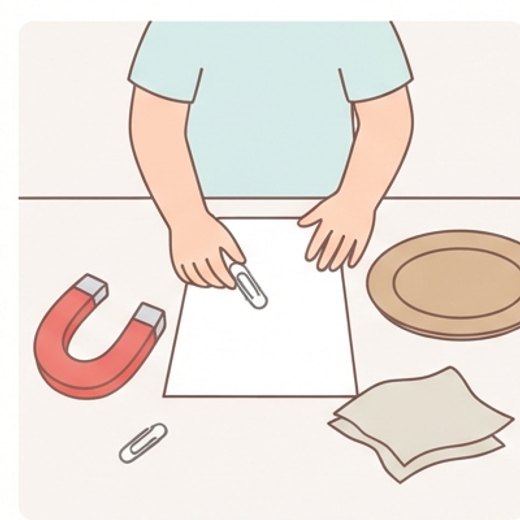
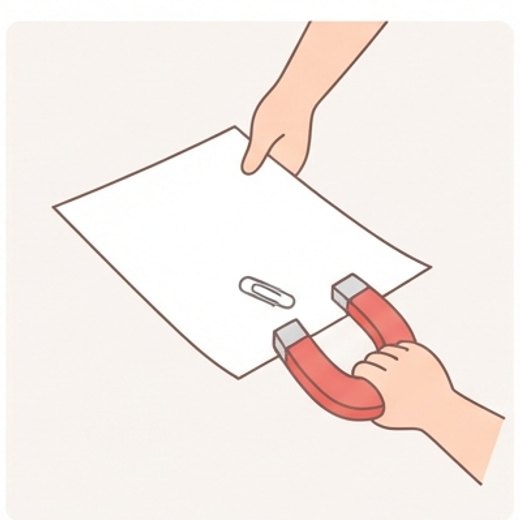
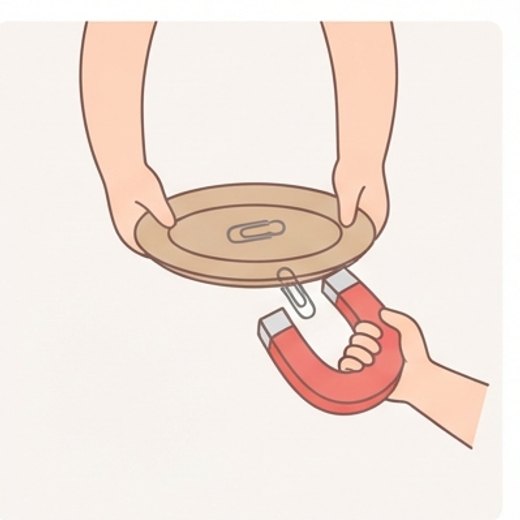
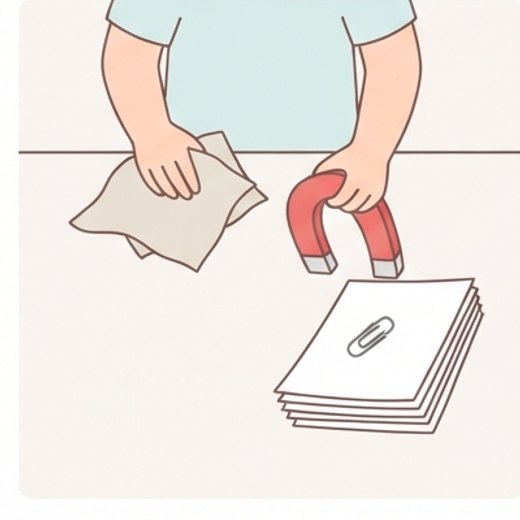
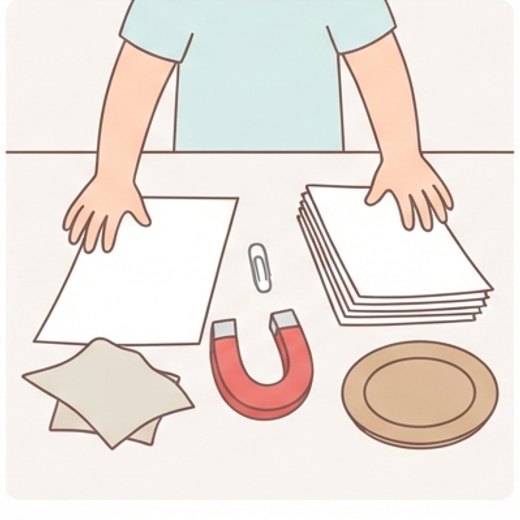


What happens: The paper clip follows the magnet through thin paper, fabric and the plate. Through a thick stack of paper or plates the pull gets weaker, and the paper clip stops moving.
Why: A magnet acts on iron things from a distance: around it is a magnetic field that passes through paper, fabric, plastic and wood. But the farther the magnet is from the paper clip, the weaker the force. That is why, through a thick layer, the paper clip no longer feels the magnet.
Safety: Small magnets and paper clips are dangerous for little ones because they can be swallowed. Use large magnets and keep children under adult supervision. Never give small, strong magnets to children. If you think a child has swallowed a magnet, get medical help right away.
Try next: How many paper plates in a stack can the magnet work through before the paper clip stops moving?

Magnetic or not? Sorting things at home
You need: a large magnet, 10-12 small objects: a paper clip, a nail, a button, a coin, aluminum foil, a plastic spoon, a pencil, a key, an eraser, a glass marble, two sheets of paper labeled YES and NO
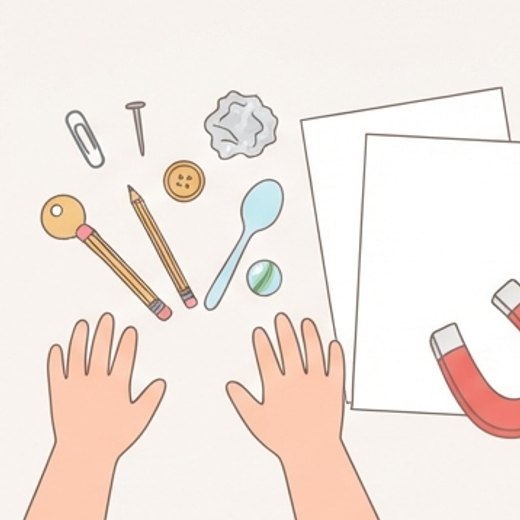
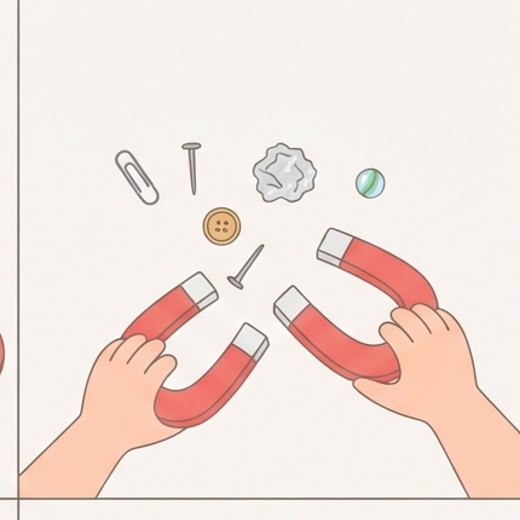
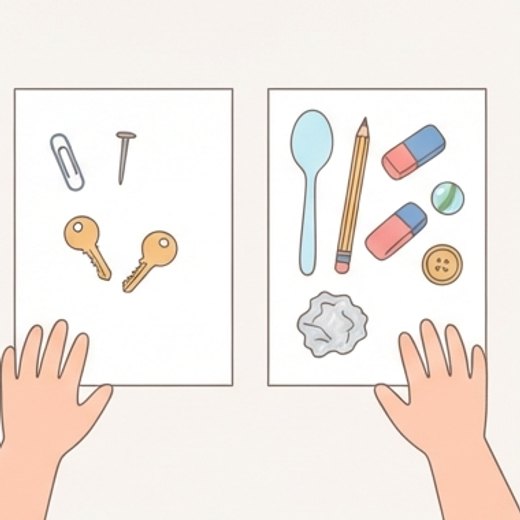
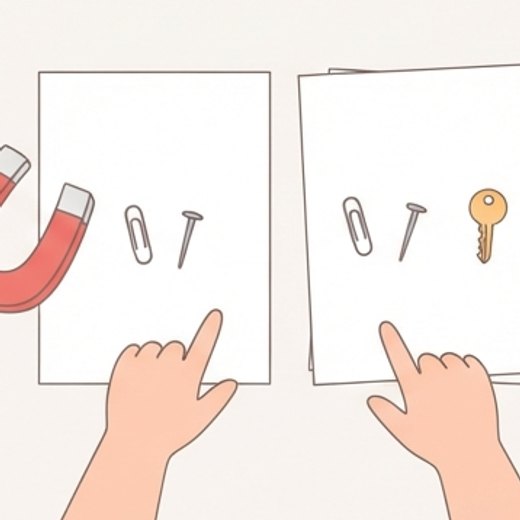
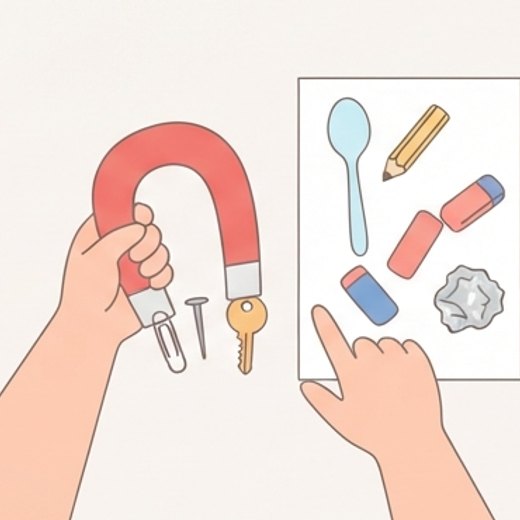


What happens: The magnet picks up the paper clip, the nail, often the key, and steel things. It does not pick up plastic, wood, glass, the eraser or aluminum foil. Coins and spoons can vary: some contain iron and others do not, so you have to test them yourself.
Why: A magnet attracts things that contain iron (and also nickel and cobalt). Not all metals are magnetic: a magnet does not attract aluminum or copper. Most steel is magnetic, but stainless steel can be magnetic or not, depending on what it is made of. That is exactly why it matters to test rather than guess.
Safety: The glass marble and some other objects are small: do not leave a little one with them without an adult watching. Keep the magnet away from phones, credit cards and watches.
Try next: Find magnets around the house. What stays on the fridge, and why?

A magnet pulls a paper clip through water and glass
You need: a clear glass or plastic cup, a paper clip, water, a medium-sized magnet
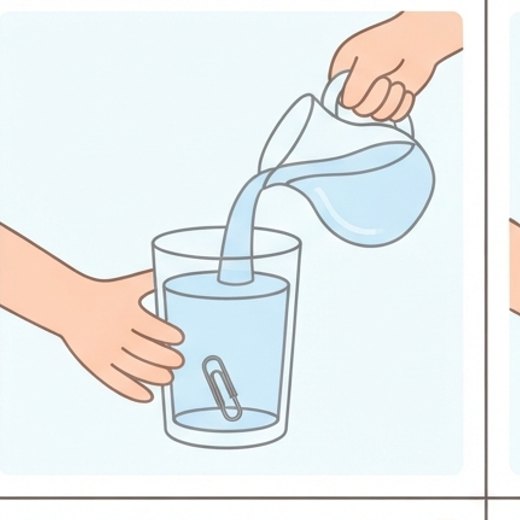
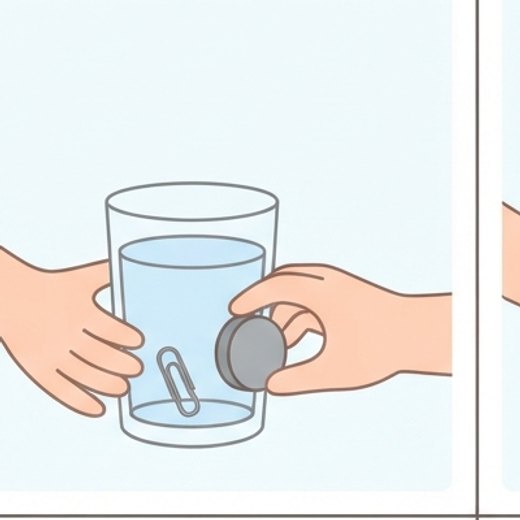
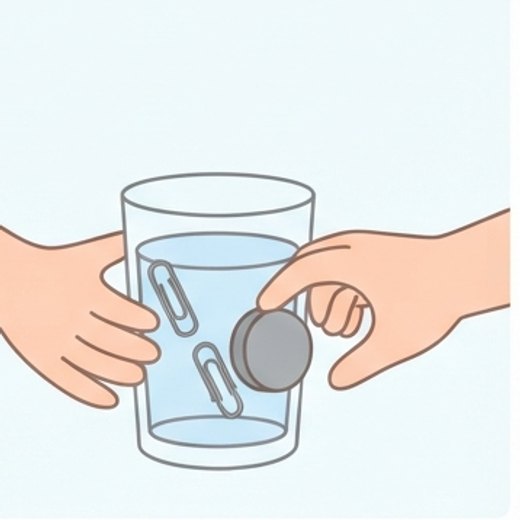
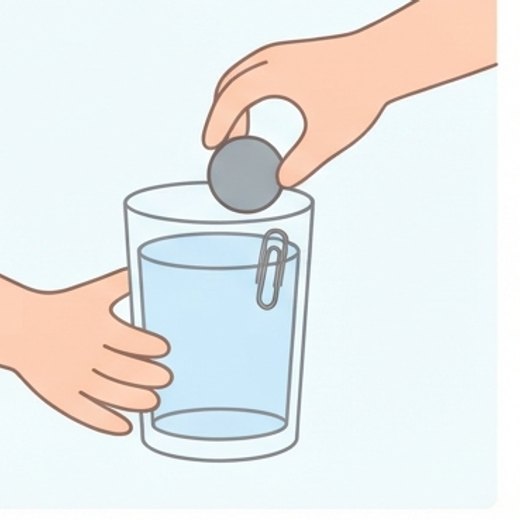
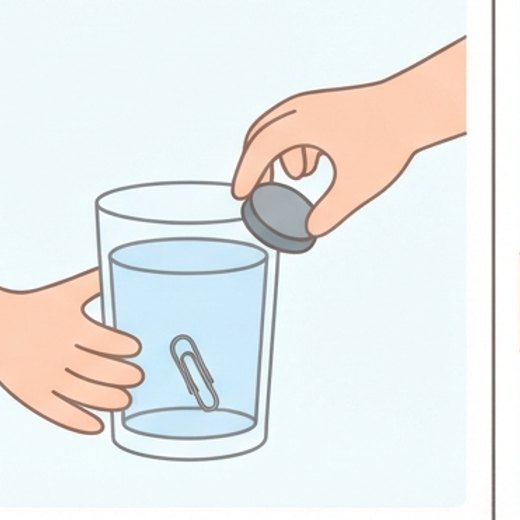


What happens: The paper clip moves through the water after the magnet, even though the magnet does not touch it. When you move the magnet away, the paper clip drops to the bottom.
Why: Glass and water do not stop a magnetic field, because they are not magnetic and do not block it. The magnet acts on the iron right through them. But the farther away the magnet is, the weaker the force, so at a distance the paper clip does not hold on.
Safety: Do not use electrical devices near water. Never put small magnets in your mouth. If you think a child has swallowed a magnet, get medical help right away.
Try next: Try two paper clips, other metal objects, or a container with thicker walls.

A needle compass: which way is north?
You need: a sewing needle (an adult hands it over), a magnet, a round piece of cork or foam, a bowl of water, a regular compass to check (optional)
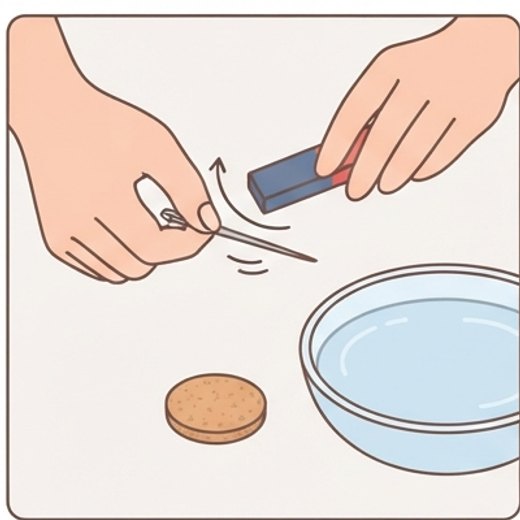
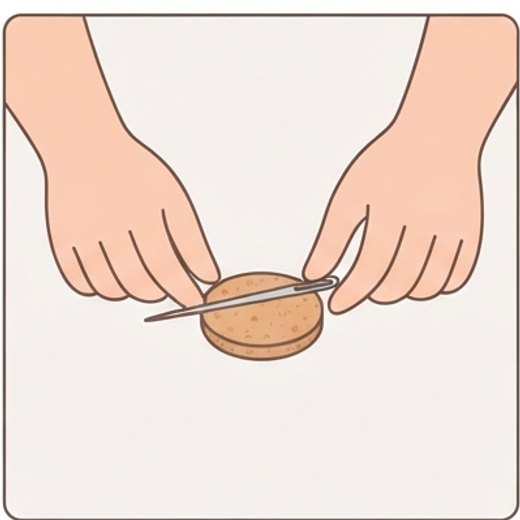
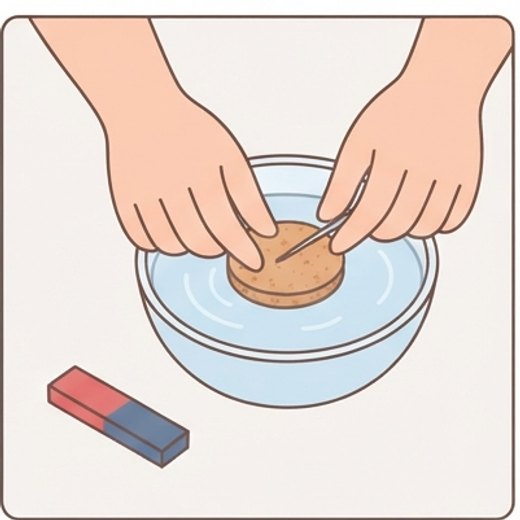
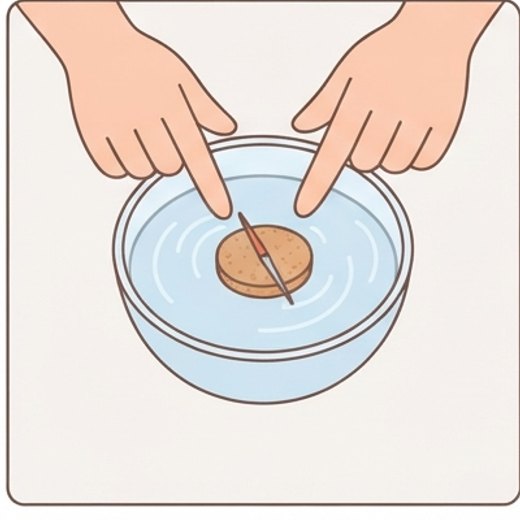
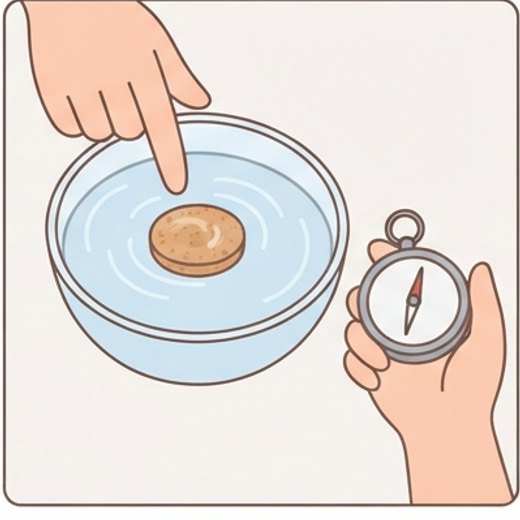


What happens: The needle slowly turns and stops along the north-south line. If you spin it, it goes back to the same position.
Why: Earth itself is like a giant magnet. Its magnetic field is weak, but strong enough to turn a light magnetized needle. A needle stroked with a magnet becomes a weak magnet itself. On the water nothing holds it in place, so it turns freely and points along Earth’s magnetic field.
Safety: The needle is sharp, so an adult handles it. Put the needle away after the experiment, and keep magnets away from little ones.
Try next: Try magnetizing a paper clip. How long does a magnetized needle stay magnetic?
Invisible forces all around
A magnet pulls a paper clip without touching it, even through paper, water and glass, and a magnetized needle floating on water turns to point north. These are forces that kids feel but cannot see. Experiments let them catch these forces: find out which things are attracted, test what a magnet can pull through, check how far away it still works. Kids love this kind of experiment because every step reveals a rule. This is how they quietly move from play to systematic observation, which is a very valuable step toward scientific thinking.
First magnet experiments can be done with three-year-olds: give them a magnet and a set of objects and let them sort things into sticks and does not stick. Older kids can test a magnet’s strength through paper or water, draw diagrams and take measurements. This way kids gradually move from observing to drawing conclusions from numbers, which is good preparation for physics lessons.
Safety and tips
Strong magnets are dangerous: small ones can be swallowed, and two swallowed magnets can pinch the intestines together and cause serious injury. If you think a child has swallowed a magnet, get medical help right away. Do not give neodymium magnets to little ones. Use large magnets from toy sets or fridge magnets. Keep magnets away from phones, credit cards and watches, which they can damage. This is a reminder of how important care and adult supervision are in every magnet experiment.
Keep a results table: which objects stuck and which did not, how many sheets of paper the magnet could pull through, which way the needle pointed. Talk about why. This is how kids learn to compare, draw conclusions and spot patterns, which is the basis of scientific thinking. It also teaches them to put conclusions into their own words instead of just memorizing other people’s explanations.
FAQ
Are magnets safe for little kids?
What does a magnet attract?
How do I explain why a compass points north?
Can we do experiments without special equipment?
Water experiments · Air experiments · Safe kitchen chemistry · Light and color · Sound experiments · Plant experiments · Body and senses · Science Experiments for Kids at Home