
Plant experiments for kids
How seeds sprout, how celery drinks colored water, which way roots and shoots grow. Windowsill experiments with an observation journal.

How does a bean sprout without soil?
You need: a clear zip-top bag, a paper towel, 2-3 dry beans (lima or kidney beans), water, tape
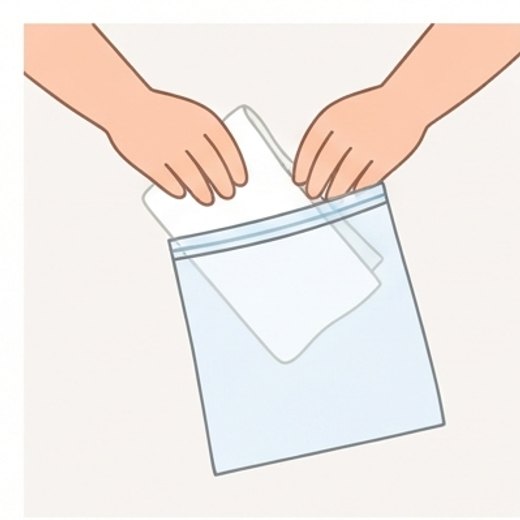
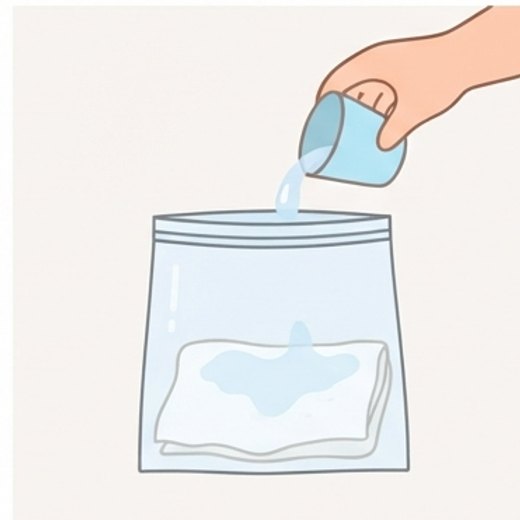
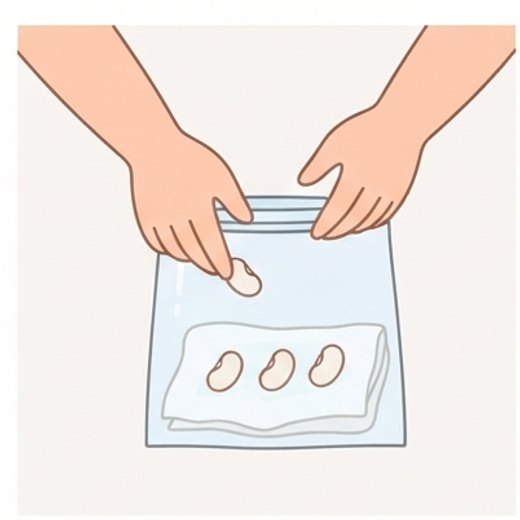

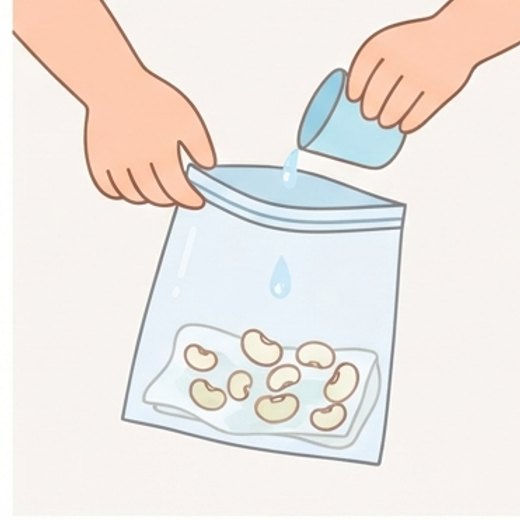


What happens: In 2-5 days the bean swells, its skin splits and a white root appears. Then a green shoot appears and grows upward. You can see it all through the bag.
Why: A seed holds a store of food and a tiny baby plant. When the seed gets water, it swells and the baby plant wakes up. The root grows first, to look for water, and then the shoot. As long as there is food stored in the bean itself, it does not need soil to get started. Later the plant needs soil and light.
Safety: Raw beans must not be eaten, so keep them away from little ones who put everything in their mouths. If mold appears on the towel, throw the bag away without opening it near your face.
Try next: Put one bean in the same kind of bag but with a dry towel. What happens?

A green garden on cotton: light or dark?
You need: garden cress seeds, cotton balls, two saucers, water, a cardboard box or a large jar
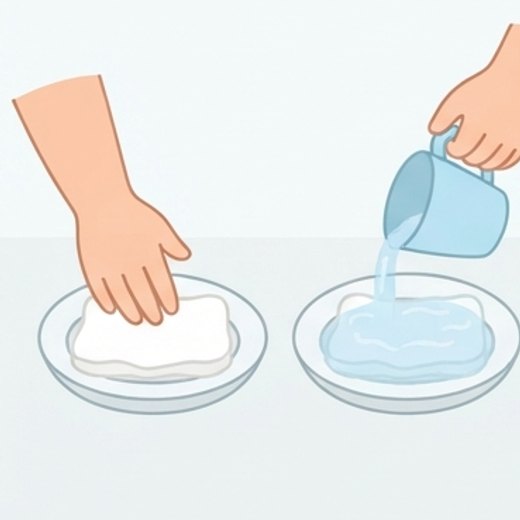
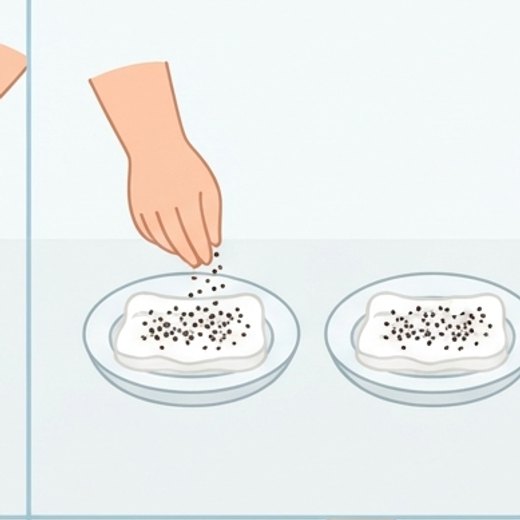
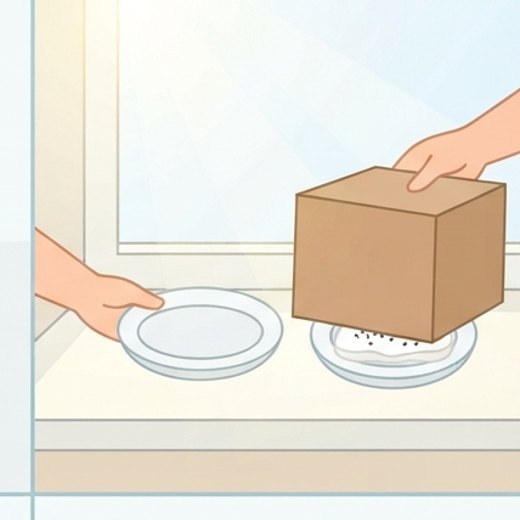
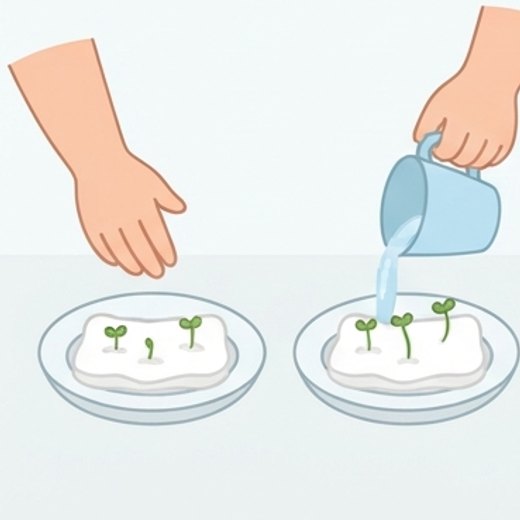
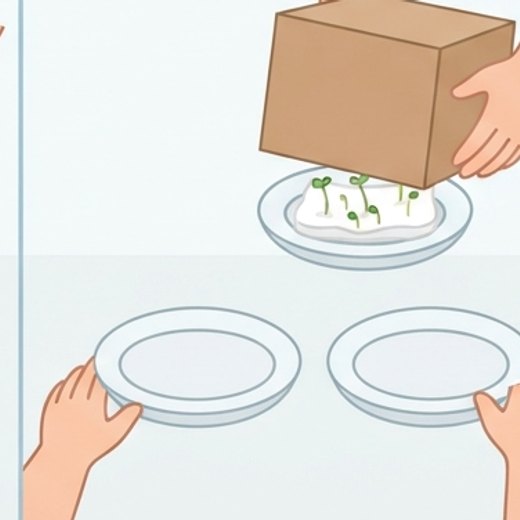


What happens: In the light, thick green grass grows. In the dark, the sprouts are longer and thinner, but pale yellow, almost white. If you used untreated seeds sold for sprouting or microgreens, the cress from the windowsill can be eaten in sandwiches.
Why: A plant gets its green color from chlorophyll, which forms in light. In the dark, the plant uses up the food stored in the seed to stretch up fast and find light, but it does not turn green. These pale sprouts are weak, because without light the plant cannot make its own food.
Safety: Wash hands after handling the damp cotton. Use untreated seeds sold for sprouting or microgreens. Eat the cress only if the cotton stayed clean, with no mold.
Try next: Put a saucer in a box with a hole in one side so the light comes from only one direction. Which way will the grass lean?

How does celery drink colored water?
You need: 2 celery stalks with leaves, a glass of water, food coloring (blue or red), a knife (for the adult)
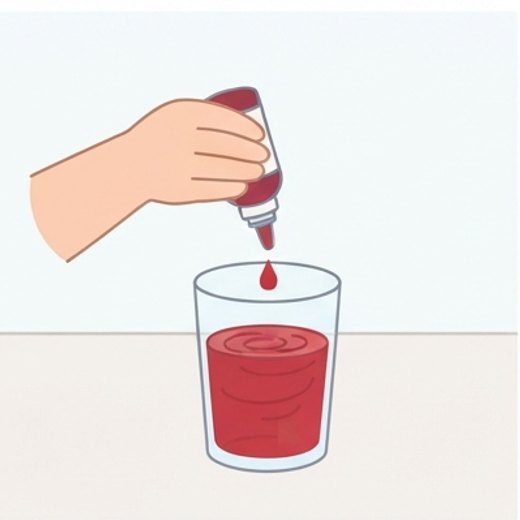
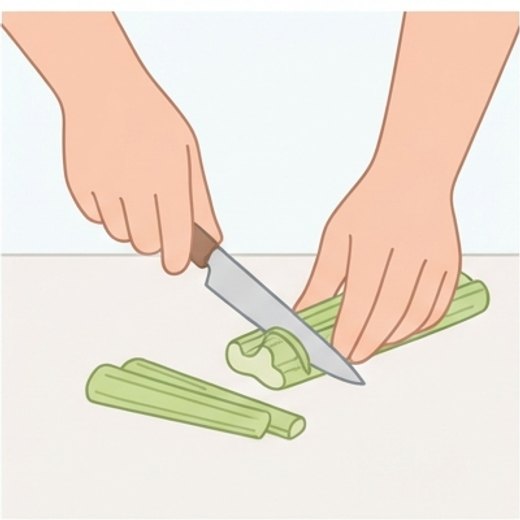
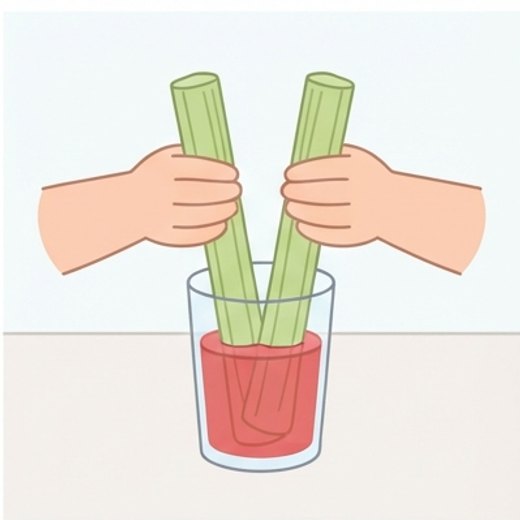
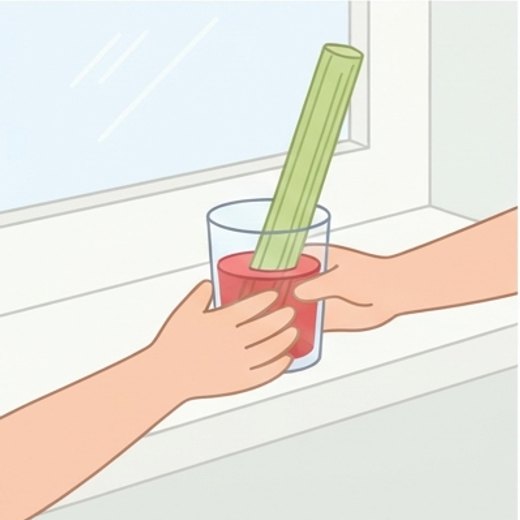
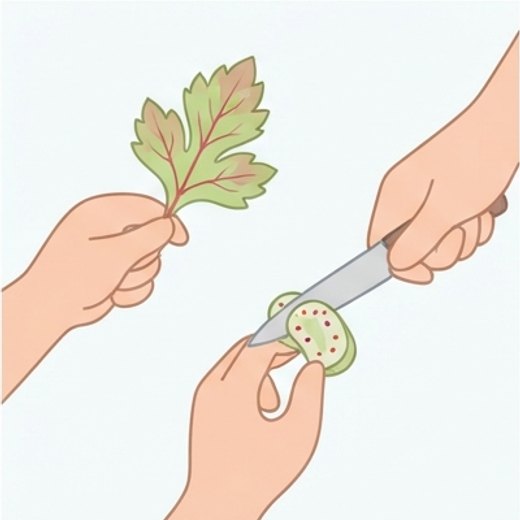


What happens: The veins in the leaves and the lines along the stalk turn the color of the water. On the crosswise cut you can see colored dots: these are tiny tubes inside the stalk.
Why: A stalk has thin tubes (xylem) that carry water up from the roots to the leaves. Water moves up because water evaporates from the leaves and pulls more water up the stalk behind it. The narrow tubes help, because water sticks to their walls. The coloring travels with the water, so it shows up wherever the water has gone.
Safety: Only an adult uses the knife. Food coloring can stain hands and clothes. It is best not to eat the dyed celery.
Try next: Have an adult cut a stalk lengthwise, then put the halves in glasses of different colors. Which leaves change color faster?

How does a root know which way is down?
You need: a sprouted bean in a bag (with a root 1-2 cm long), a clear zip-top bag and a damp paper towel, tape, a marker
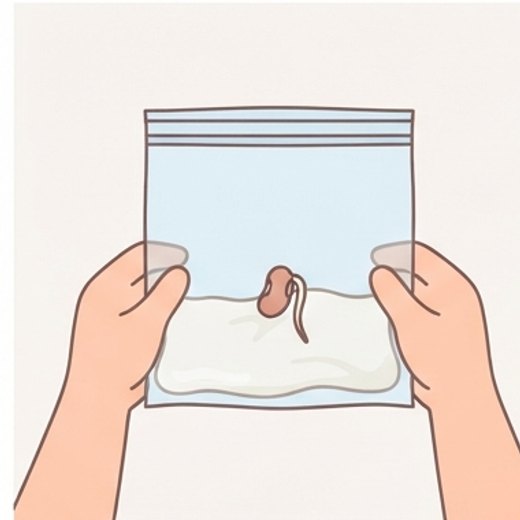
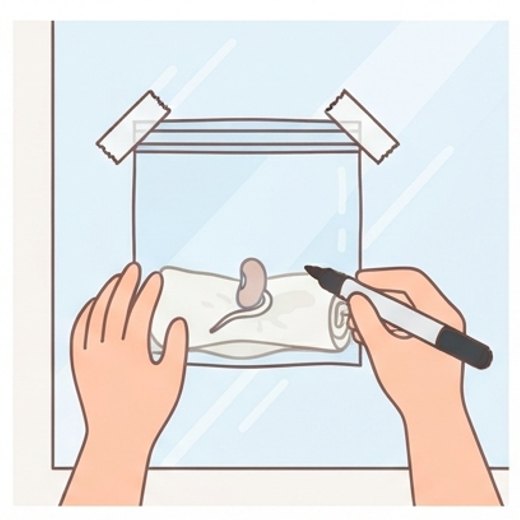
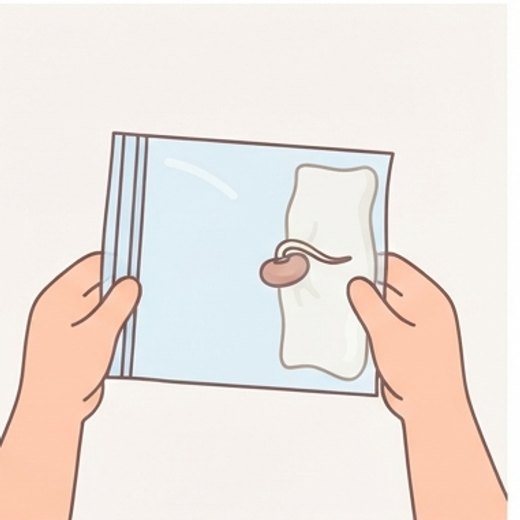
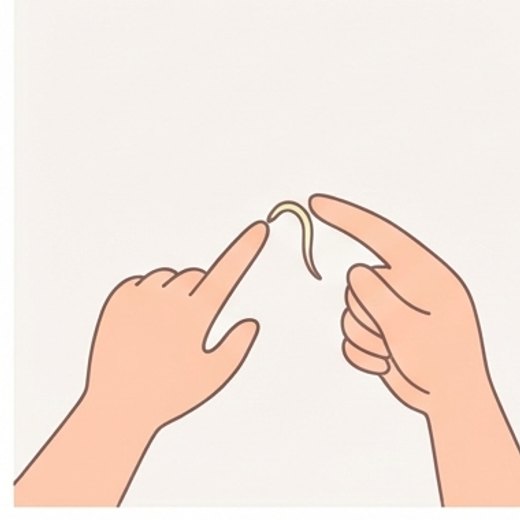
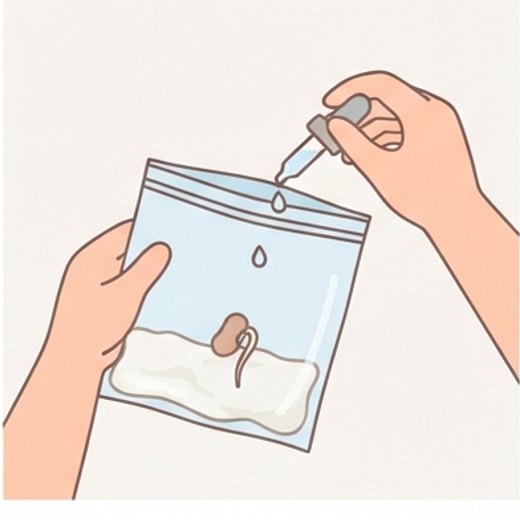


What happens: The new tip of the root bends and grows down again. The old part stays pointing the same way, and you can see a bend where you turned the bag.
Why: A plant senses which way Earth’s gravity pulls; this is called gravitropism. Cells in the tip of the root contain tiny heavy grains that settle to the bottom and show which way is down. Because of this, the cells on the upper side grow faster, and the root bends toward the ground.
Safety: If mold appears, throw the bag away without breathing it in. Wash your hands.
Try next: Turn the bag to another side again. How many times will the root change direction?

A plant finds the light in a maze box
You need: a shoebox with a lid, 2 cardboard dividers, a pot with a sprouted bean or pea, water, tape, scissors
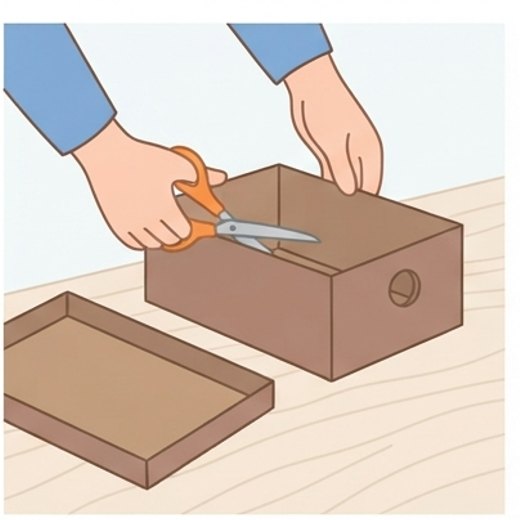
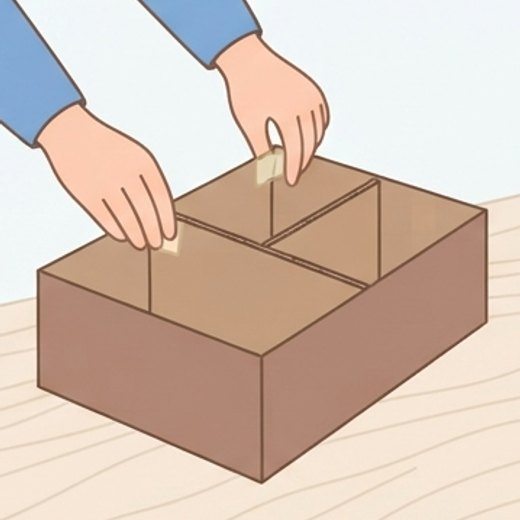
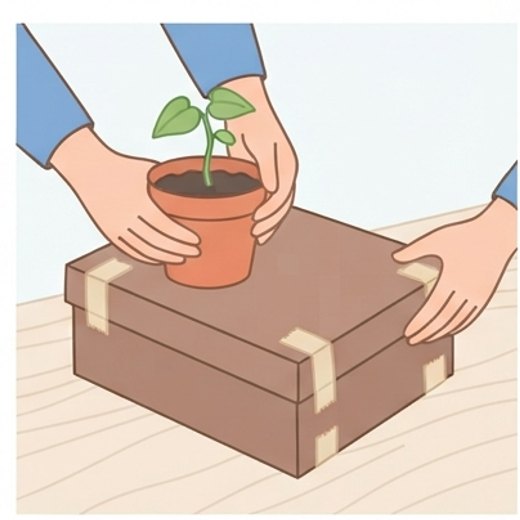
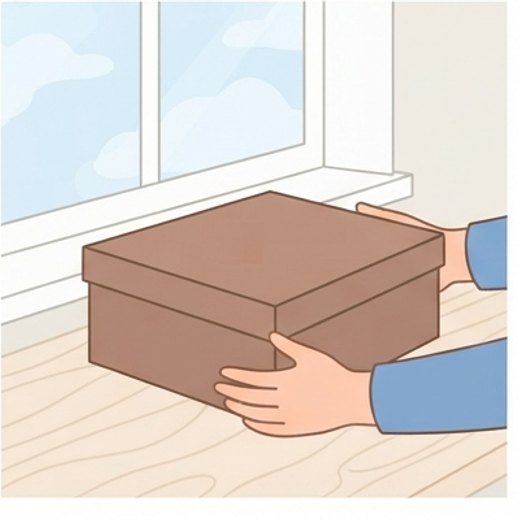
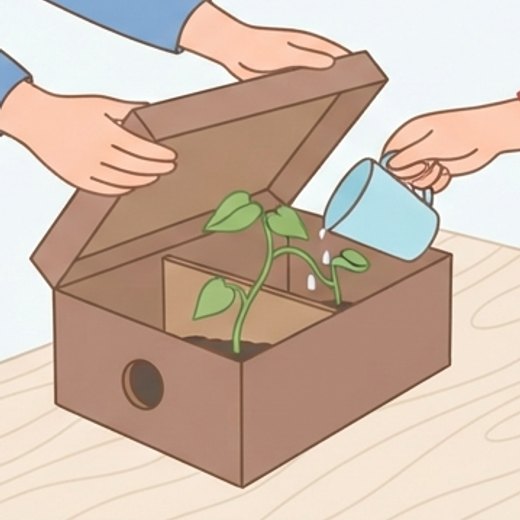
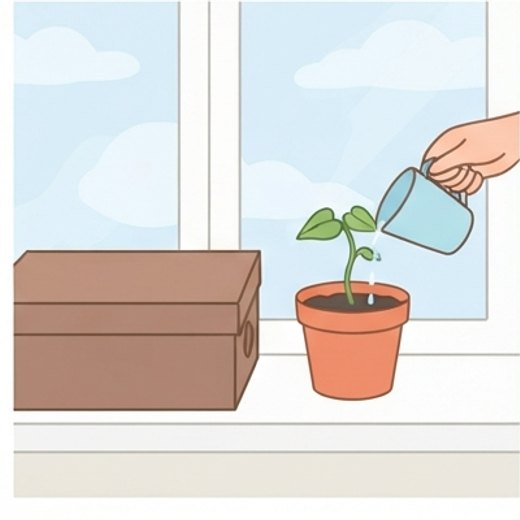


What happens: After 1-2 weeks the sprout grows around the dividers toward the hole and leans toward the light. The plant on the windowsill grows straight up.
Why: Plants grow toward light; this is called phototropism. The tip of a sprout has a hormone called auxin, and more of it collects on the shaded side. The cells on that side stretch more, and the stem bends toward the light. This way the plant reaches more light, which it needs to make its food.
Safety: An adult handles the scissors. Do not leave the box unattended near a heater.
Try next: Move the hole or add more dividers. Will the plant find its way?
Plants teach patience
Unlike quick baking soda experiments, plants take time. That is a good thing: kids learn to wait and observe. A bean in a damp paper towel sprouts within a few days, and celery in colored water shows colored veins within a few hours. Daily notes and drawings show changes that are hard to spot at a single glance. This rhythm is different from the usual pace of play, and slowing down is a valuable experience for kids.
Plant experiments are perfect for a windowsill or a balcony and need no special materials. Beans, peas, cress, onions or wheat sprout easily. For kids it is a chance to care for something living and be responsible for it. It is also a reason to talk about where food comes from and why it matters to protect nature. An experiment like this can last for weeks and bring joy with every change your child notices.
How to keep track of observations
Start an observation notebook: every day, draw the sprout and write down its height, measured with a ruler or with fingers. Note the date, the conditions and the amount of water. Help your child compare: what grows faster, in the light or in the dark? This is a simple form of a scientific experiment with a control group. It is also a lesson in caring, which kids absorb better this way than from grown-ups’ stories.
Keep things clean: moldy cotton or soil is a reason to replace it, not to keep going. Eat cress only if you used untreated seeds sold for sprouting or microgreens and the cotton stayed clean, with no mold; never eat raw beans, and wash hands after working with plants. Put the plants in a safe place, away from pets. If an experiment does not work, try again and compare the results: that is science too.
FAQ
How many days until we see a sprout?
Can we eat the sprouts?
How does the celery experiment work?
What if the seeds do not sprout?
Water experiments · Air experiments · Safe kitchen chemistry · Light and color · Sound experiments · Magnets, forces and motion · Body and senses · Science Experiments for Kids at Home