
Water experiments for kids at home
What floats and what sinks, how water climbs and travels, how salt changes water and ice. Simple water experiments for the kitchen table, with explanations for kids.

Why do raisins dance in sparkling water?
You need: a clear glass, fresh sparkling water, 5-6 raisins, a tablespoon
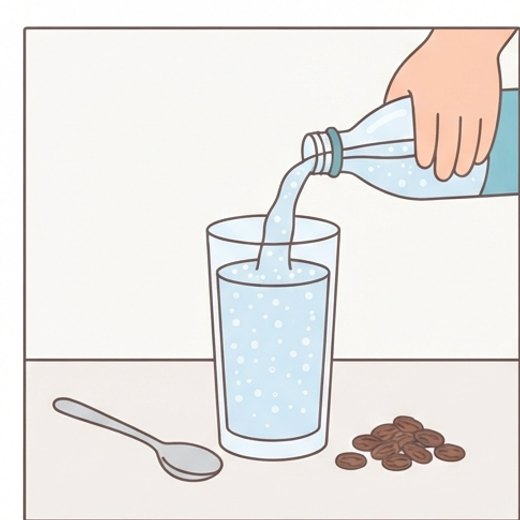
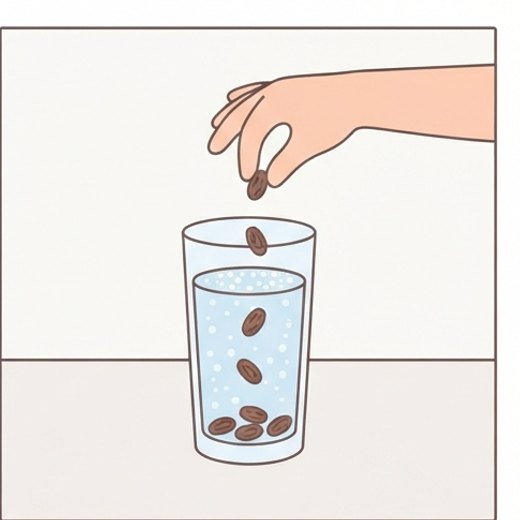
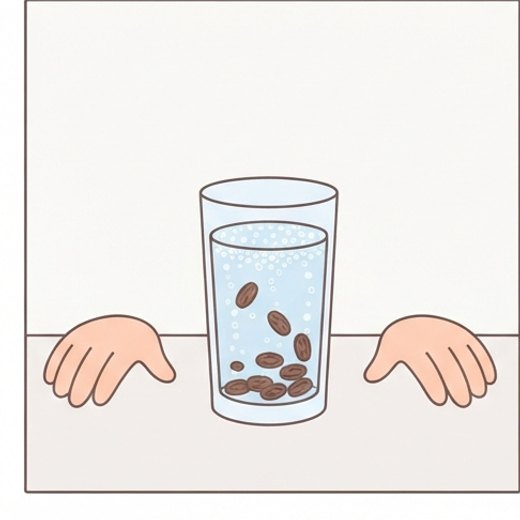
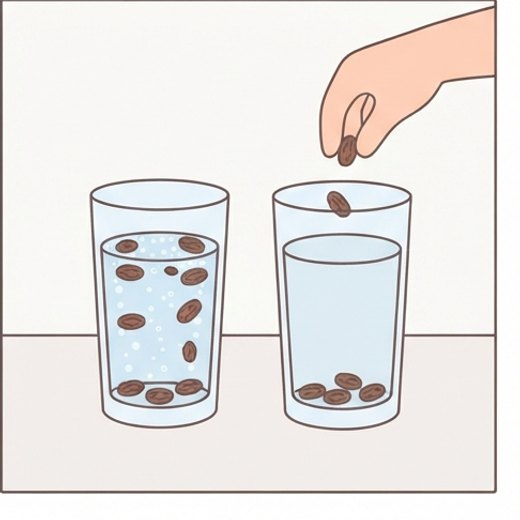


What happens: After a minute or two the raisins start rising to the surface, then sinking, then rising again. In plain water they just stay on the bottom.
Why: Sparkling water has carbon dioxide gas dissolved in it, and the gas comes out as bubbles. The bubbles cling to the wrinkly surface of a raisin, and together they become lighter than water, so the raisin floats up. At the surface the bubbles pop, the raisin becomes heavier again and sinks. This keeps going as long as there is gas in the water.
Safety: Raisins are small, so give them to little ones only with an adult watching, to avoid choking. Use a sturdy glass or a plastic cup.
Try next: Try peas, a small piece of pasta or corn kernels. Which ones dance best, and why?

How can you make an egg float?
You need: a raw egg, a tall glass, warm water, salt, a tablespoon
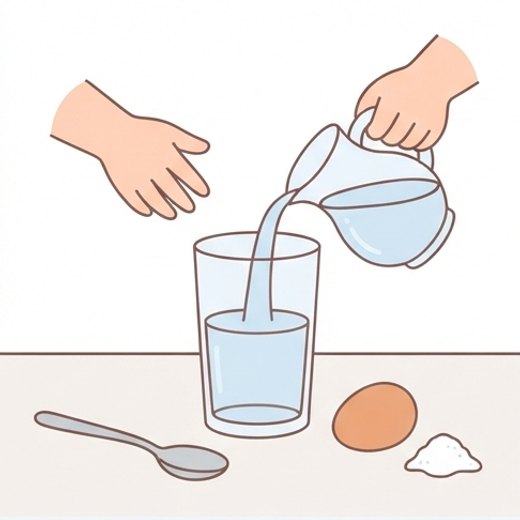
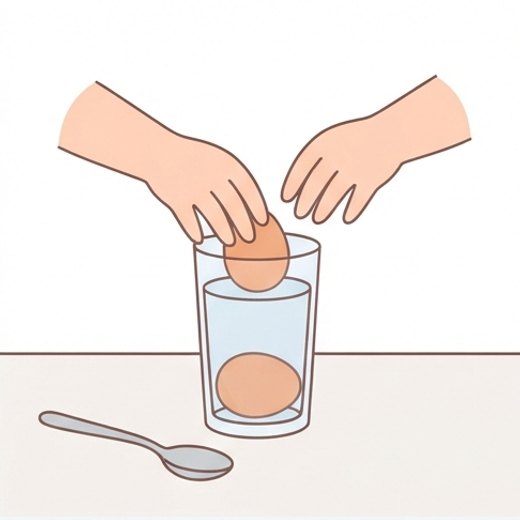
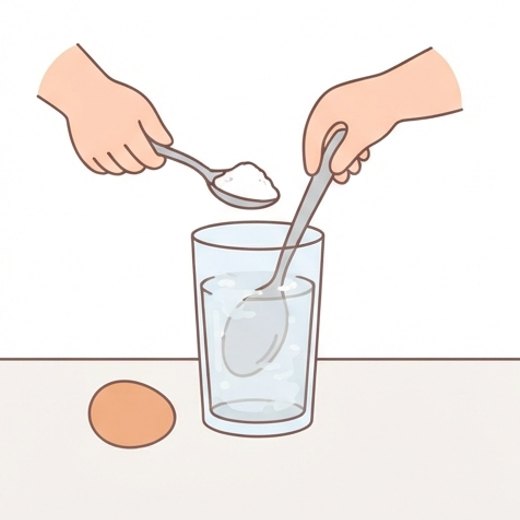
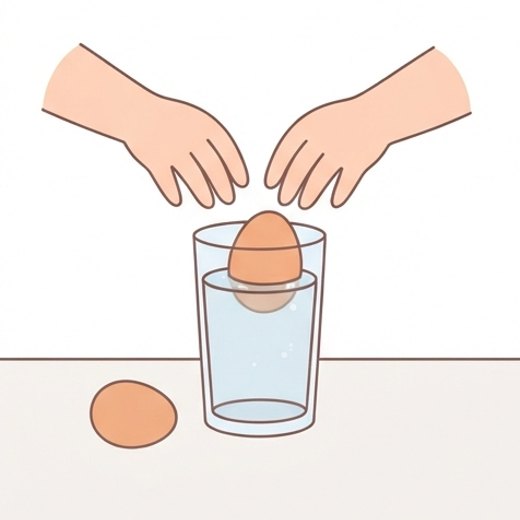


What happens: In plain water the egg lies on the bottom. In very salty water it rises and floats near the surface. If you add a little plain water, the egg slowly sinks again.
Why: An egg is heavier than the same amount of plain water, so it sinks. When salt dissolves, the water becomes heavier for its size; in physics we say its density goes up. Once the water’s density is greater than the egg’s, the water pushes the egg up and it floats.
Safety: The egg is raw, so wash hands with soap after the experiment. Do not drink the salt water.
Try next: Very slowly, one spoonful at a time, pour a layer of plain water on top of the salt water: the egg will hang in the middle between the layers.

How does water walk from glass to glass?
You need: 3 clear glasses, paper towels, red and yellow food coloring, water
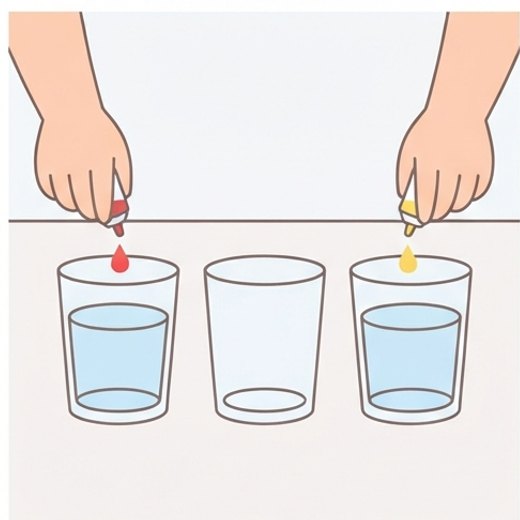
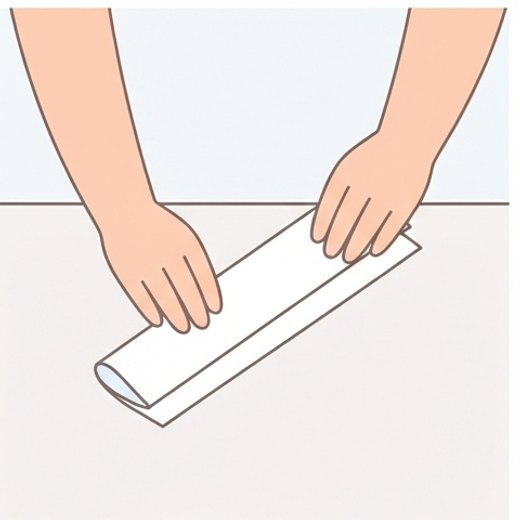
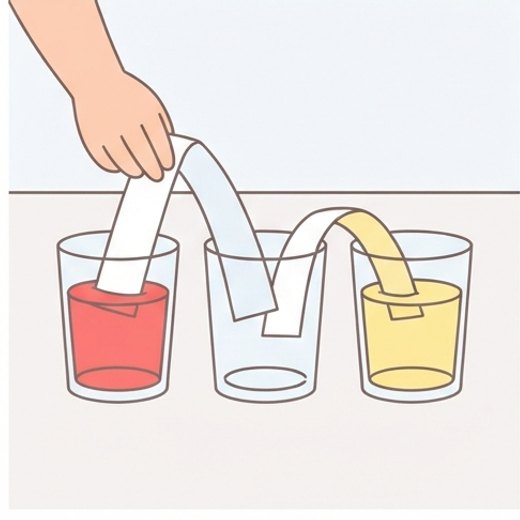
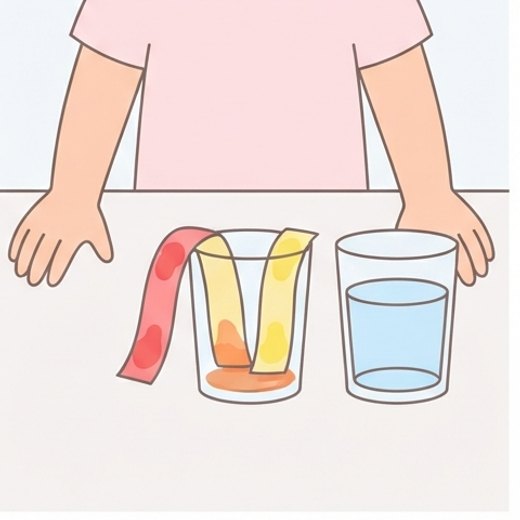


What happens: The water climbs up the towel and moves into the middle glass. There the red and yellow mix and turn orange. It happens slowly: the first color shows up in the middle glass after about 20-40 minutes, and after a few hours the water levels are almost even.
Why: Paper is made of tiny fibers with small gaps between them. Water clings to the fibers and pulls other water molecules along with it; this is called capillary action. That is why water can climb up against gravity and then trickle down into the lower glass. When the levels even out, the movement stops.
Safety: Food coloring can stain clothes and the table, so put down a plastic tablecloth.
Try next: Add blue water and more glasses: what colors do you get? Try napkins and toilet paper too.

Why doesn’t water spill from an upside-down glass?
You need: a glass with a smooth, even rim, a plastic card or postcard, water, a sink or a large bowl
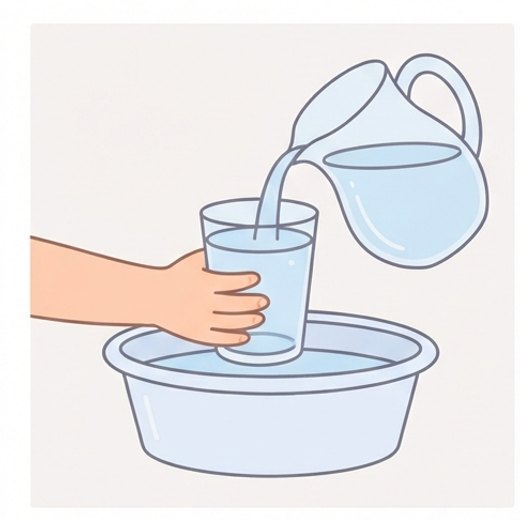
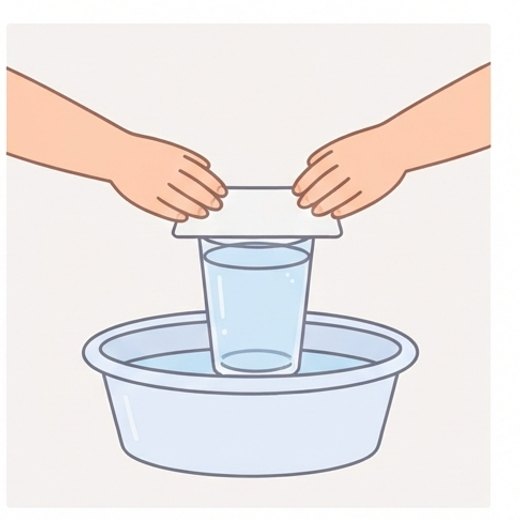
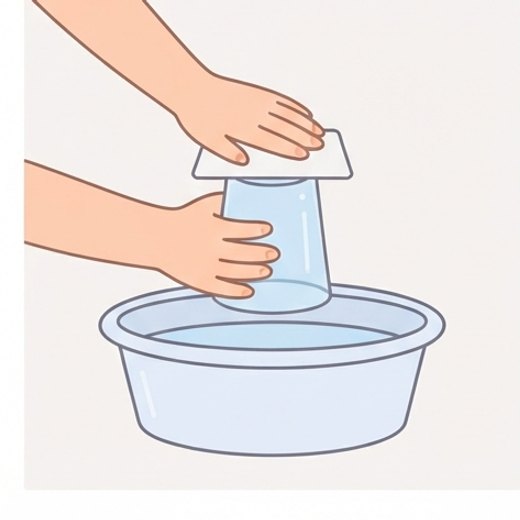
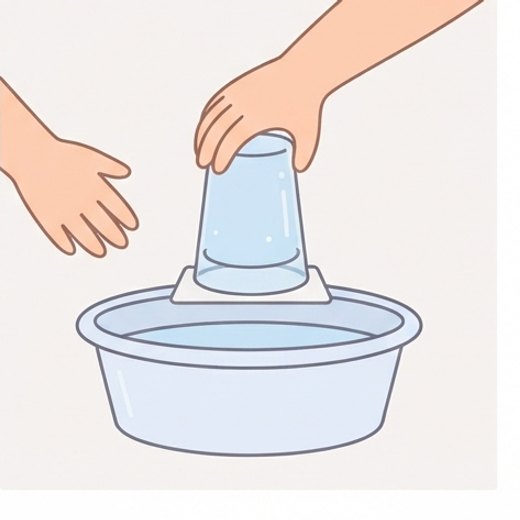


What happens: The card stays on the glass, and the water does not spill out.
Why: The weight of the water pushes down on the card from above. From below, the air outside pushes up on it, and that force is greater than the weight of the water. A thin film of water at the rim keeps air from getting in, because surface tension is at work here too. If the glass is not full or the card does not fit snugly, air gets inside and the water spills.
Safety: Do it over a sink or a large bowl. Do not use a glass with a chipped rim.
Try next: Try different glasses and a glass that is not quite full. When does the experiment work, and when does it not?

How can you lift an ice cube with a string?
You need: a glass of water, an ice cube, a 15 cm piece of string, a pinch of salt
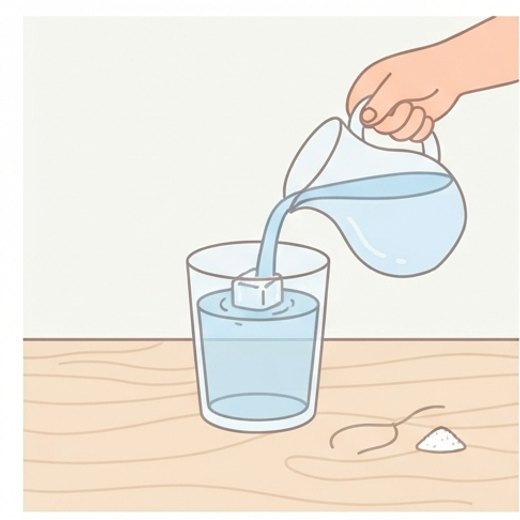
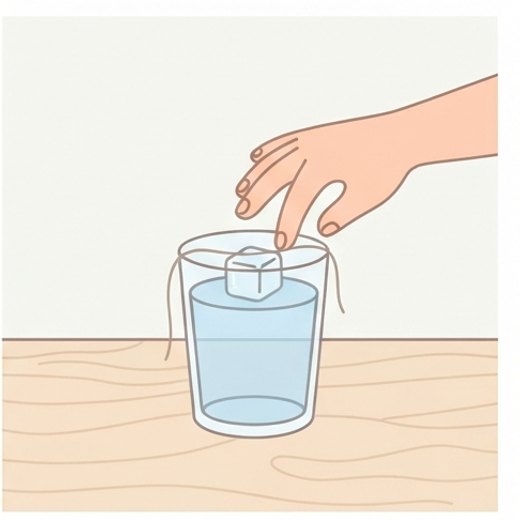
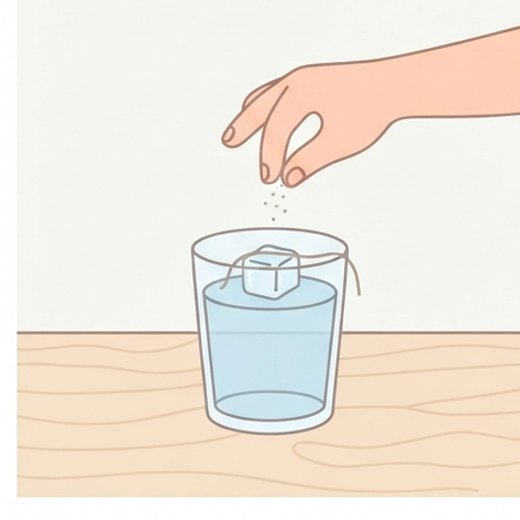
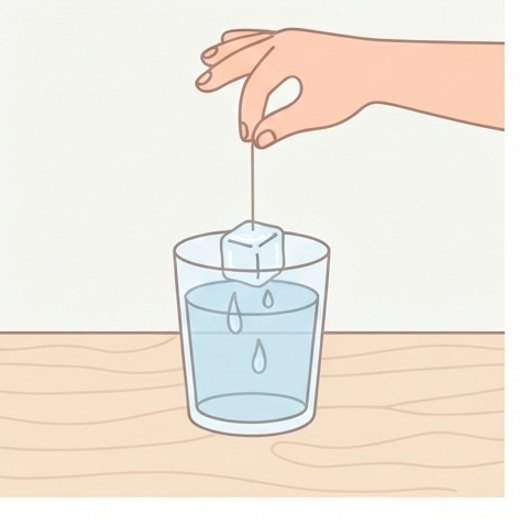


What happens: The string freezes onto the cube, and the cube rises with it.
Why: Salt dissolves in the thin layer of water on the ice and lowers its freezing point, so the ice under the salt melts and cools everything around it, because melting takes heat away. Then the salt gets diluted by the melted water, and the water around the string freezes again, locking the string into the ice. Without salt the string does not freeze on.
Safety: Do not taste the salty ice. Ice is cold, so do not hold it in your hands for long.
Try next: Compare salt, sugar and baking soda. Which works best? Think about why roads are salted in winter.
Water: the easiest lab there is
Every home has water, so it makes a perfect first lab. In these experiments raisins dance in sparkling water, an egg floats in salt water, colored water walks along paper towels from glass to glass, and a string lifts an ice cube out of a glass. Kids see the changes with their own eyes, which beats any picture in a textbook. Water is also safe, which makes it a great first experiment for little ones.
A water experiment is easy to connect to everyday life: why the ice in a drink melts, why roads are salted in winter, why a paper towel soaks up a spill. Kids start noticing what happens around them and asking questions. It helps to let them predict: “Do you think the egg will sink or float?” Even a wrong guess sparks curiosity and makes the result memorable. That is how an ordinary glass of water becomes the start of a little investigation, and your child feels like a real scientist.
What to keep in mind during water experiments
First, get the space ready: a plastic tablecloth, towels, a sink, a large bowl or a tray. Kids plus water means puddles, and that is normal, so instead of scolding, invite them to help clean up. For little ones, use small containers that are easy to hold with both hands. Never leave a child unattended near water, even very little of it: a toddler can drown in a few centimeters. This is also good practice in tidiness and responsibility, which come in handy in anything they do.
When an experiment calls for warm water, an adult pours it, and it should be warm, not boiling. For the ice cube experiment, take the ice straight from the freezer and remind kids not to taste the salty ice. Write all the results in a notebook: the date, what you did, what you saw. This is how kids get used to scientific thinking, which also helps at school.
FAQ
Can children under three do water experiments?
What should we do if water spills?
How do I explain why something sinks?
Do we need special materials?
Air experiments · Safe kitchen chemistry · Light and color · Sound experiments · Plant experiments · Magnets, forces and motion · Body and senses · Science Experiments for Kids at Home